
The Silent Casualty of Modern Camping: Consideration
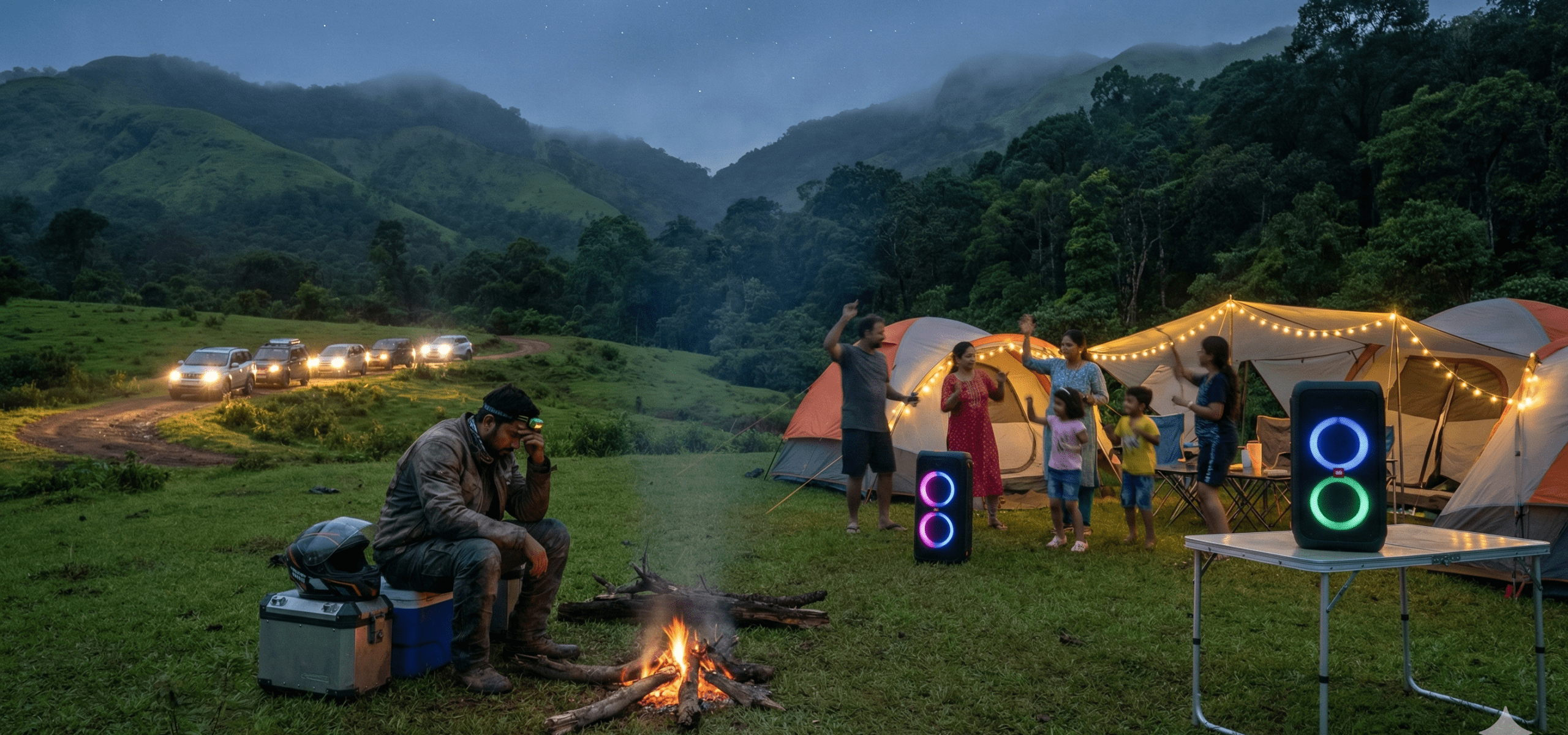
Picture this: It’s last night, I’m in the wilderness after a long day of tackling trails on my motorcycle, finally unwinding at a campsite with the stars overhead and the crackle of my campfire.
Peaceful, right? Wrong. A convoy of families rolls in, unleashing massive Bluetooth speakers blasting music at ear-splitting volumes. What was supposed to be a serene escape from Pune’s chaos turned into a neighborhood block party – in the middle of nowhere.
This wasn’t camping; it was an urban sprawl with tents. These “campers” treated the wild like an extension of their high-rise balconies: screaming over thumping bass, and zero regard for the dozen other souls seeking solitude. As a motorcycle traveler who’s crossed length and breadth of our beautiful country, dodged everything from landslides to leopards, I’ve seen my share of trail etiquette fails. But this? A new breed of camper who brings the city to the campsite, infecting their kids with the same arrogant disregard. And yeah, that vibe is sexually transmitted down the family line – kids mimicking the behavior like it’s normal.
It’s a shame because campsites are shared spaces, fragile ecosystems where one group’s party can ruin everyone’s reset. If you’re heading out camping, here’s the real talk on camping etiquette to keep the wilderness wild for all.
Essential Etiquette for Camp Sites
- Sound Off Before Sunset: No blasting speakers, generators, or fireworks after dark. Quiet hours (usually 10 PM to 7 AM) aren’t suggestions, they’re an unwritten pact. Use earbuds/headphones for music or low-volume chats. Your favorite track? Save it for the ride home.
- Respect the Space Bubble: Campsites are public, so keep noise, light, and smells contained to your spot. No shining headlights into tents at midnight. Distance your setup from others, and if you’re in a group, pick a designated area.
- Leave Every Place Better: Pack out every trash, wrappers, even biodegradable bits. Campfires? Use existing rings, keep them small, and fully extinguish (douse, stir, douse again). I’ve seen sites trashed by “families” who treat them like picnic spots.
- Kids and Pets on a Leash: Little ones are great but supervise them, no running through sites yelling or throwing rocks. Dogs? Leashed and quiet. No one is okay with them running around entering tents or sniffing their food.
- Arrive Prepared, Not Entitled: Research site rules via apps like Google Maps or local forest dept sites. Arrive late? Set up silently with red-light headlamps.
Public campsites thrive when we all act like uninvited guests in nature’s home. That night, I finally had to raise my voice (not something I’m proud of) after the music continued well past 1 a.m. despite repeated, polite requests throughout the evening. Only then did the music stop, and the campsite returned to what it was meant to be: quiet. What followed was pushback. I was told it was inappropriate to shout in front of their kids or families. That argument missed the point entirely. Was it acceptable to subject hundreds of other campers to loud music deep into the night, but unacceptable to call it out after every reasonable approach failed? This was a large campsite with over 400 people, and it took just a small group to disrupt the experience for everyone else. That night made something clear to me: the impact of one’s actions on others seems to rank very low on people’s priorities these days.
Next time, folks, may be channel that energy into stargazing or storytelling around a low fire. The wilderness doesn’t care about your playlist.
What’s your worst campsite horror story? Drop it in the comments, let’s build better habits together.


 LEAVE THE ROAD