

Since my last post, “Almost There!!!”, two of the common questions that I have been asked are – Why a Royal Enfield and Why the Himalayan? I thought why not write about it to make things a little less repetitive for me.
So, let me start with the motorcycle first.

Why, the Himalayan?
To begin with, off-road capability. The Himalayan is the first purpose-built motorcycle from the Royal Enfield stable. 21-inch wheels up front, mated with a 17-inch at the rear, with dual purpose tyres to tackle no-road situations. Ground clearance of 220mm while keeping the seat height at a comfortable 800mm. This was the perfect recipe for a dual-purpose motorcycle, regular highway touring and off-road trails, both could be handled with ease on the Himalayan.
One might argue that the Himalayan had so many issues when it was launched. Yes, it did. And have you ridden the BS4 variant yet? Anyone who has ridden the BS4 variant will agree that Royal Enfield has no doubt taken all the learning and feedback and fixed most, if not all, issues in the Himalayan. The engine has got a good low-end grunt and stress-free even at high speeds. The motorcycle I tested allowed me to cruise comfortably at 120/130kmph. The low-end torque is a saviour in off-road conditions. It would have been nice to have a little more power and torque but nothing to cry home about. All this at a lovely price point of just 1.8 lakhs INR ex-showroom. Honestly, I do not see any other motorcycle in the country which is as purpose-built as this in such a price point. Before I continue, I think I can get the 2nd question into consideration here.
Why, a Royal Enfield?
Continuing from where I left off, one of the reasons for selecting the Himalayan is the low cost of ownership. Royal Enfield has somehow managed to price it right. I do not have to worry about dropping the motorcycle, which is inevitable in an off-road terrain as the spares are pocket-friendly and easily available. With over 1000 service centres across India, I will never be far from one, in case I need help. It’s like the SBI of motorcycle service centers, you will always find one, no matter which part of the country you are in.

Additionally, the roadside assistance also ensures you do not break a sweat trying to get to one either. Royal Enfield has managed to build an ecosystem around motorcycles and motorcycling activities. From being the oldest motorcycle manufacturers in the country to creating a community around riders. No other brand can boast of having a dedicated ride team which creates experiences for its riders. Various brands, like Mahindra-Jawa, KTM, Bajaj have tried their hand at creating something similar and I have been to a few. However, none of them implement it as grandly as Royal Enfield. The legacy and lineage show in the finesse with which these rides are conceptualized. There is no stone left unturned to ensure that the rider is part of the entire experience.
To cut the story short, I chose the Himalayan because it meets my requirements as a capable off-road motorcycle, one on which I can also tour comfortably. I chose a Royal Enfield motorcycle because of the low cost of ownership and easy access to spares and service.
No manufacturer can vouch for a 100% perfect machine, what matters is what they are willing to do to address the issues if you have one. I believe Royal Enfield is doing a good job of it.


Last December, I spent a week with Royal Enfield motorcycles, in Rajasthan. The experience changed something in me.
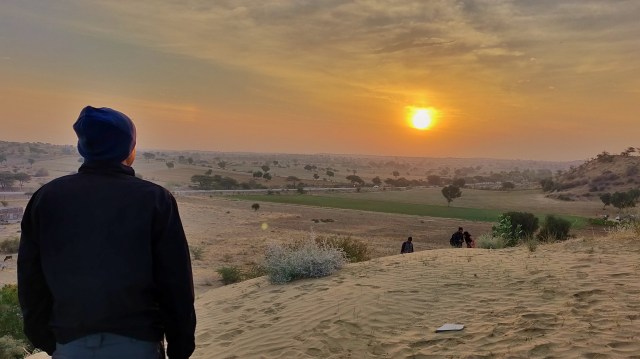
Sunrise atop the sand dunes.
On a cold winter afternoon, as I walked out of Jodhpur airport, I was wondering what’s in store for me, for the next week. I was part of a new concept, a ride which would start late afternoon and take us through the night. Aptly called the Royal Enfield – After Dark.

Blessings at the Om Banna (Bullet Baba) Temple
Over the next few days, I rode various motorcycles from the Royal Enfield stable. Some modern hooligans, some old school classics. It took me back to my early teens when I rode pillion on my father’s black Bullet 350. I fell in love with the distinctive ‘thump’ and loved the attention, the black and chrome motorcycle gathered, as we rode across our small steel city township. I was never allowed to ride it (not surprising, of course) but I could push it in/out of the garage. I would get my hands dirty when my father used to work on his motorcycle. Engine-oil leaks, throttle/clutch cables breaking and even the wiring harness burning out were part and parcel of the experience. Old school motorcyclists were meant to know how to fix and tinker with their machines. Certain circumstances led to the sale of the Bullet before it could be passed on to me. I wished to keep my father’s motorcycle, however the sentiment was gone.
The Classic 350 Signals
Over the years I never got around riding a Royal Enfield long enough, let alone, own one. I am not sure what kept me away. I think somewhere between working on the motorcycle with my father to touring around the country on one, I was looking at spending more time on the road than in the garage. My love for touring surpassed my love for getting my hands dirty. I wanted to ride and not spend all my time fixing my motorcycle. I was looking for more reliability and maintenance free motorcycles, compared to what I had come across so far. I don’t deny that the learning from those DIY sessions still got me out of sticky situations.

Regroup before we ride into the night
Coming back to the After Dark trip, I rode the Thunderbird 350 & Classic 350 Signals motorcycles. These were still the old generation motorcycles from the Royal Enfield stable. However, they felt different. Different in a good way. Unlike the older motorcycles I had come across in my early teens, these felt better. Gear shifts were smooth. Fewer vibrations. Comfortable seats. Overall a big jump from the oil spewing, bone shakers I had known from the olden days. All this was without changing much of how they looked. Old school, the legacy was kept intact.
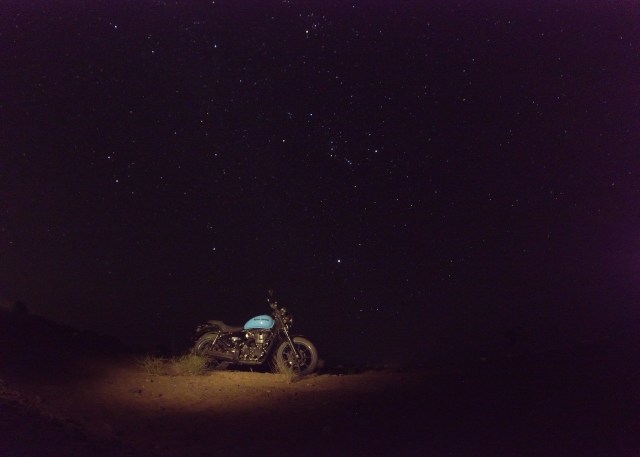
Under the starlit skies of Sam Dunes
Next, I got my hands on the Thunderbird 500x, a modern funky take on the older sibling. Black treatment on most of the motorcycle and contrasting bright colours on the tank, made it stand out. The overall styling was urban centric, and the updates did not end there. The engine was more refined. The overall dynamics of the motorcycle was a lot better than the older sibling. And I realized, I could keep good speeds without any jarring vibes, so much that I did not realise how fast I was going till someone said she was having a tough time keeping up on her Himalayan. Flicking it around city traffic was fun too and it did make heads turn.
A couple of days into the trip, I got my hands on the Himalayan (BS4). The youngest (the 650 twins had just been launched and were not yet available for the ride) of the Royal Enfield stable, the one I call, the hooligan. This one blew my mind. Yes, most of you who know me might find it hard to believe that I am saying so.

Chasing the Sun, on the Royal Enfield Himalayan
I will explain. I like my motorcycles fast. My existing one (Benelli TNT300), touches 170 kmph, but in a true sense, my cruising speeds were never over 130 kmph. I loved hunting for trails, always looking for ‘slower’ roads to reach my destination. I could do that on my TNT300, but off-road capabilities – well, let me not get started. It was a good motorcycle, but I must admit the maintenance was a little on the pricier side. Also, the cost of spares, most of which imported, kept me recalling my balance sheet while tackling technical trails off-road.
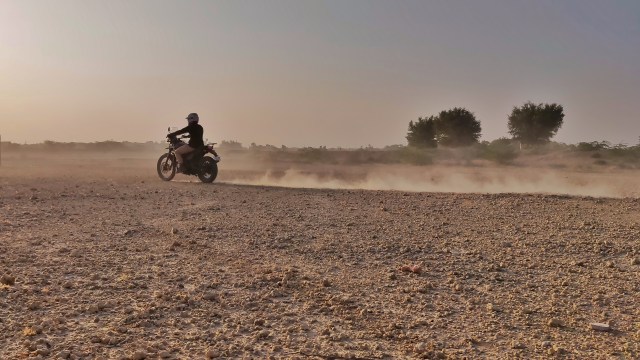
The Himalayan feels at home here
Now, in case of the Himalayan, it is bang for the buck. I was able to do decent triple digit speeds and it handled well. The motorcycle was equally at ease in off-road terrain. It was lighter than most adventure motorcycles, except may be the BMW GS310. If I wanted to buy one, I would have to sell my kidney in the black-market. I had ridden the Mahindra Mojo earlier when I was considering a tourer which would help me occasionally bash some trails. However, the overall ergonomics of the Mojo did not make it comfortable for me. Something always felt a little off for me. I’d probably avoid the Jawa for the same reasons.

We ride into the desert after dark
The Himalayan is butch to look, and the features are more function than form. I felt that it would fill the blanks for my trail riding requirements. I was looking for a comfortable tourer that could do good speeds and tackle off-road terrain, without breaking a sweat. Something, I will not be worried about dropping as it won’t be that expensive to fix. Something, which has a massive service network in India, so, I am never far from one, if I need one. By the end of the trip I had made up my mind, the Himalayan will be part of my stable soon.

Bird watching at Luni
Overall, as if the motorcycles were not enough, the trip was a lot more to talk about. May be, I will talk in detail about it in another post. The places we stayed at, were unique in its own sense, two of which were age-old palaces. The amazing team from Royal Enfield worked in sync to ensure we had a fantabulous experience. I will not leave out the Gun Wagon, which was tailing the group all through, ensuring they are present to support, in case needed. Though we did not need their support, it was reassuring to know that the Gun Wagon had our back.

Chasing Shadows on the Classic 350 Signals
Coming to the point where I mentioned, something changed in me. Well, I started looking at Royal Enfield as a legacy, something which got my father and me on common ground. An entity existing to ensure that they don’t just sell you a motorcycle, but an experience. I am glad I went for this ride. It helped me reconnect with my past, one which I had almost forgotten.
Like someone once said, ‘Royal Enfield does not sell motorcycles anymore, they sell a lifestyle.’

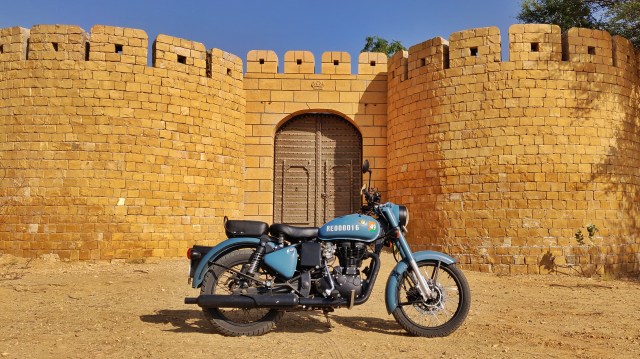
At the Jaisalmer Fort with the Himalayan

All ye riders and motorcyclists, lend me your ears!
Summer is here and by the likes of it, it’s gearing up to be a scorchingly unbearable one. So what I’m gonna do is slap-on my ventilated riding gear – Mesh Jackets, Mesh Pants and Mesh Summer Gloves and my BluSnap to beat this heat and hit the road.
Wait. Blu what?
BluSnap is a wearable cooler for your helmet. You just snap it on and enjoy the ride as it helps you stay cool in traffic. When fixed onto your full-face helmet, it cools your head through a water-based cooling mechanism which uses a battery-operated fan to pump air through a wet air filter to direct cool air into the helmet. This, in turn, creates a microclimate inside your helmet which is 6-15 degrees cooler than the surrounding environment. In a nutshell, BluSnap is like a desert cooler for your helmet.
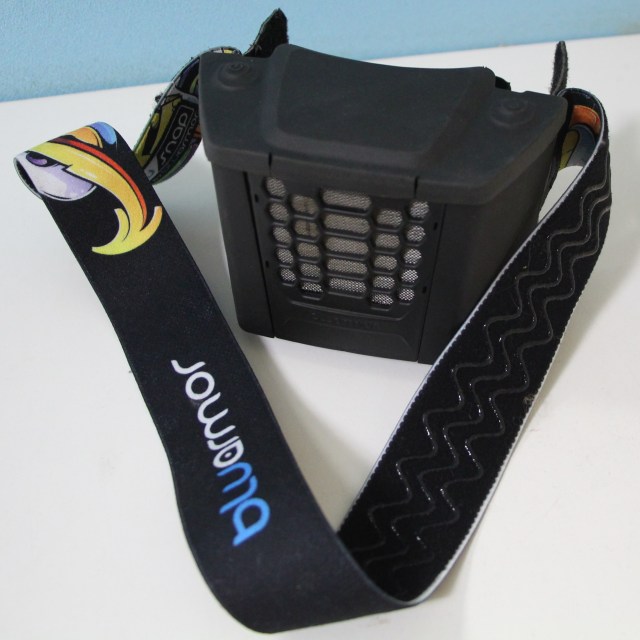
Normally, by the time I reach my destination, my hair is sweaty and my face, due to the constant opening and closing of my helmet visor at the traffic light, is so baked it would put Jesse from Breaking Bad to shame. In short, it’s suffocating and icky to ride in traffic with a full-face helmet. Not to mention the tiredness and burnout. Sound familiar? Now, thanks to BluSnap, created by BluArmor Helmets, I can kiss my helmet woes goodbye.
I’ve been using BluSnap for a few weeks now and I’d like to share my experiences.
Cooling – City Commute
Yes, it works! It was an absolute ‘breeze’ during my city commutes especially during stoppages. Once on, I felt a subtle draft of cool air on my face and around my head. The closed helmet visor ensured no loss of cooling. What a difference compared to before when my entire head would become unbearably sweaty or worse, when I’d open the visor for some air circulation, I’d be exposed to the elements, mainly dust which would stick to my sweaty face. Now, not only is my face dust-free but the cooler temperatures inside the helmet ensure a freshness and comfort I’ve never known before.
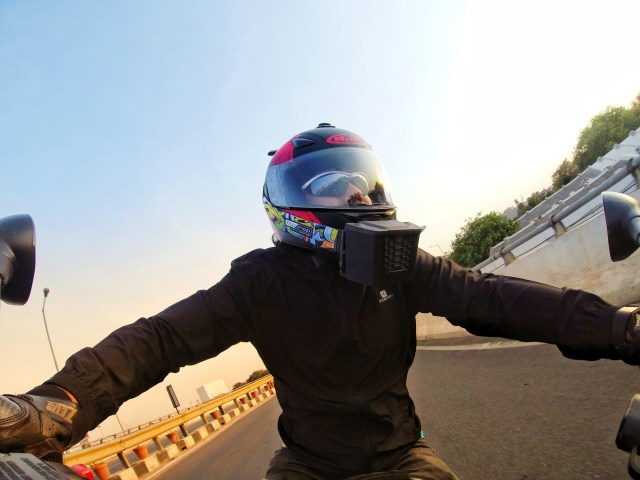
Cooling – Highway Commute
Once proved during city commute, I decided to test run BluSnap on a stretch of highway, where speeds are higher. And it didn’t disappoint! As I increased my speed, I switched off the fan on the device. As a result, the air got pushed in automatically because of the higher speeds. The subtle flow of cool air became cooler and the air flow, faster. The best part is that I wasn’t even using the device battery power to do this. The device was working on its own, assisted by the air flowing into it, due to high speeds of the motorcycle. While this device may be pitched for the folks from the two-wheeler user segment for the daily city commute, BluSnap packs quite a smart punch also for those who hit the highway for longer rides.
Simple Installation
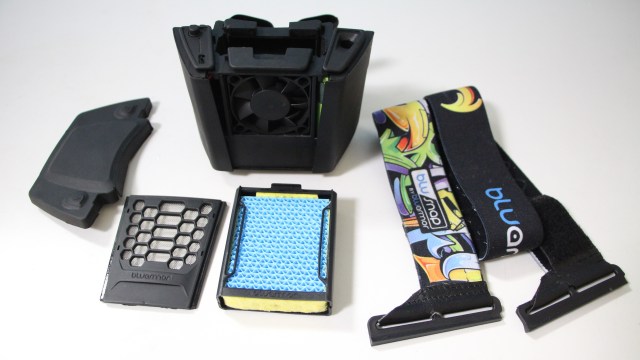
1 minute. That’s how long it takes to install BluSnap. In case your helmet chin-bar is not rounded and not an exact fit to the device, a couple of Velcro strips are added to hold the device in place. As a norm, the funky colorful elastic band holds the device to the helmet. And, you get five different designs to choose as per your liking. I used it across multiple helmet brands – Daijya, HJC, SMK, MT to name a few. It worked fine with all of them.
Once fixed, all you need to do is fill the water reservoir and charge the battery and you are good to go. One full charge lasted me around ten hours – that’s enough for a five-day working week, assuming daily usage of two hours. A reservoir full of water will give you around two hours of cooling. A knob at the bottom of the device switches off the water-flow into the filter while the helmet is not in use. The air filter is washable and can be used for six months with regular use. The product, replacement filters, and straps are available in their online shop. Basically, I like the simplicity of the product.
Room For Improvement?
I love BluSnap. It’s a simple device that does what it claims to do and does it well. However, being a seasoned rider and a strong advocate of anything that makes a rider’s life easier while on the road, I’d be very interested in seeing how the makers of BluSnap iron out the following observations.
- Size – Currently, it’s big and bulky because of which it tends to catch the wind, albeit slightly if you turn your head at high speeds but it’s manageable. Although it doesn’t block your view or cause discomfort due to weight, I’d have liked it to be smaller.
- Water Level Indicator – There is no water level indicator. So, there is no way to figure out if the water is over. I realized it was over when some fine dust crept in as the filter dried off. The workaround is to fill water after every two hours or so.
- Air Flow – There is no way to stop or filter the flow of air into the helmet. Even if the fan is off and you are moving, the air movement through the fan will suck in any ambient smells, too. So watch out while riding next to a drain or a garbage dump. But hey, this happens in regular helmet setup too.
At the end of the day, I would highly recommend this product to anyone who loves traveling by motorcycles, especially in the summertime. And at a price point near 2000 bucks INR, which includes a strap and an extra filter, this portable helmet cooler is the coolest thing bikers could want this summer!
Click here to purchase >> Blu Armor Helmets
Use code HELMETKAAC at checkout to avail a discount.
May the COOL be with you!!!


 LEAVE THE ROAD